
How AI Helps Malaysian SMEs Reduce Workload, Improve Productivity, and Minimise Mistakes
Many Malaysian SMEs are not short of effort. They are short of time.
Sales teams reply to WhatsApp messages late at night. Accounts teams key in the same invoice details again and again. Operations staff check stock manually before confirming orders. Owners ask for sales reports and wait for someone to export, clean, and explain the numbers.
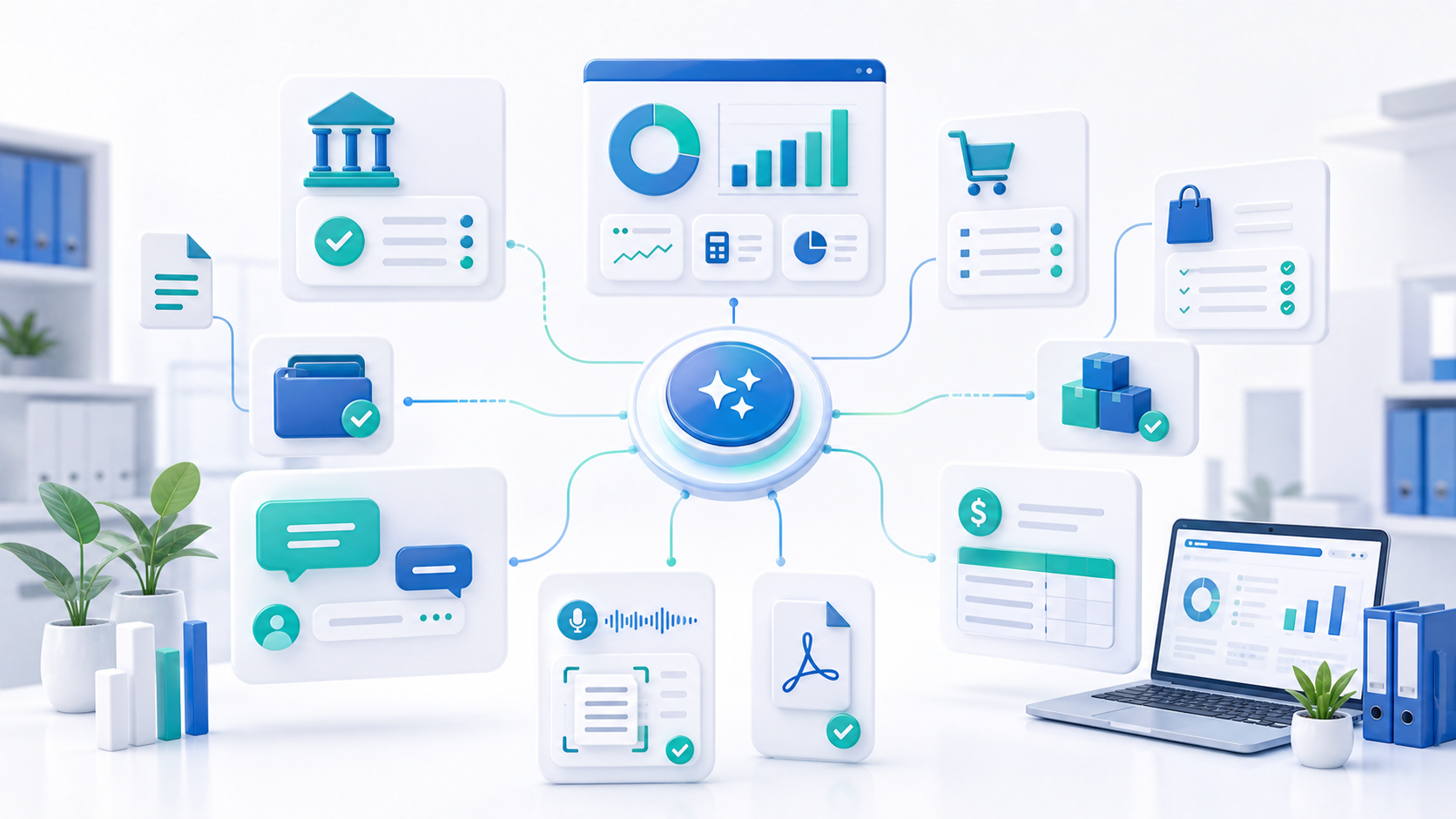
AI can help, but not by replacing every employee overnight. The practical value of AI for SMEs is simpler: connect AI to the systems the business already uses, let it handle repetitive work, and keep humans in control for approvals, exceptions, and decisions.
For companies already using tools such as AutoCount, SQL Accounting, CRM, POS, ecommerce, WhatsApp, or Telegram, AI automation can reduce workload, improve productivity, reduce dependency on manual follow-up, and lower the risk of human mistakes.
What Is AI in Business?
Artificial intelligence, or AI, is software that can understand information, recognise patterns, make suggestions, and complete tasks based on rules, data, and context.
In daily business operations, AI can work with:
- Text messages from customers
- Voice messages from WhatsApp or Telegram
- PDF purchase orders
- Invoice images and delivery orders
- Bank statements
- Product catalogues
- Accounting records
- Stock balances
- Customer service FAQs
- Internal SOPs
When AI is connected to business software through secure API integration, it can do more than answer questions. It can read a customer order, check stock, draft a sales order, prepare a purchase request, flag missing information, summarise conversations, and send the task to a human for confirmation before anything important is posted.
That is where AI becomes useful for SMEs: it becomes part of the workflow, not just a chatbot on the side.
Why Malaysian SMEs Should Consider AI Automation Now
MSMEs are a major part of Malaysia’s economy. The Department of Statistics Malaysia reported that MSMEs contributed 39.7% of Malaysia’s GDP in 2025 and 48.7% of total employment. This means productivity improvements in SMEs matter at national scale, not only company level.
Malaysia is also moving toward wider AI adoption. AI Malaysia Berhad, the national AI agency under the Digital Ministry, has published the National AI Action Plan 2026-2030 to guide AI adoption, impact, and governance. The Ministry of Digital has also highlighted AI’s role in improving SME productivity, reducing operational cost, and helping businesses stay competitive.
For SMEs, the best starting point is not a big abstract AI project. The best starting point is usually one painful workflow that repeats every day.
Key Benefits of AI for SMEs
1. Reduce Manual Data Entry
AI can extract details from PDF, image, voice, and text messages, then prepare structured data for your team to review. This reduces the need to retype customer names, item codes, quantities, prices, bank references, and invoice numbers.
2. Reduce Human Mistakes
Manual work creates predictable mistakes: wrong item code, missed attachment, duplicate order, wrong amount, outdated stock balance, or forgotten follow-up. AI can validate information against master data and flag exceptions before the mistake reaches the customer or accounts.
3. Improve Response Time
Customers expect fast replies on WhatsApp, Telegram, Facebook Messenger, and website chat. AI can answer common questions, collect order details, check basic availability, and escalate complicated cases to staff with a conversation summary.
4. Reduce Dependency on Individual Staff
Many SMEs rely heavily on one or two experienced people who know “how things are done.” AI can turn SOPs, product rules, price lists, and service policies into a searchable assistant, so newer staff can work with more confidence.
5. Scale Without Hiring at the Same Pace
When order volume increases, SMEs often hire more admin staff to handle repetitive work. AI automation helps the same team process more enquiries, orders, documents, and reports without increasing headcount linearly.
6. Give Owners Better Visibility
AI can summarise sales trends, overdue payments, customer complaints, stock issues, or delivery exceptions from connected systems. Instead of waiting for manual reports, owners can ask natural-language questions and get faster answers.
Real-Life AI Automation Examples for Malaysian SMEs
Example 1: AutoCount Bank Reconciliation Assistant
Many accounts teams spend hours matching bank statement lines against invoices, payments, and customer references.
With AI and AutoCount integration, the system can read bank statements, identify likely matching invoices, detect duplicate payments, and highlight transactions that need human review. The accountant still approves the final reconciliation, but AI reduces the matching workload and catches inconsistencies earlier.
This is useful for businesses with many daily online transfers, marketplace settlements, or customer payments with incomplete references.
Related service: AutoCount Accounting Malaysia and API Integration Services.
Example 2: Create Sales Orders from WhatsApp or Telegram Messages
Many trading, wholesale, F&B, and distribution businesses receive orders through WhatsApp:
“Boss, send 10 carton item A, 5 carton item B, same address as last time.”
Sometimes customers send voice notes. Sometimes they send a photo of a handwritten order. Sometimes they attach a PDF purchase order.
AI can read the message, transcribe voice, extract order lines from images or PDFs, identify the customer, match product names to item codes, check stock, and draft a sales order. If information is missing, the AI can ask the customer a follow-up question or send the draft to staff for confirmation.
This reduces missed orders, wrong quantities, and time spent copying messages into accounting or ERP software.
Related service: WhatsApp Automation Malaysia, Wholesale Ordering System, and AI Solutions.
Example 3: Purchase Order and Supplier Document Processing
For SMEs that buy from multiple suppliers, staff often receive quotations, delivery orders, invoices, and statements by email or WhatsApp.
AI can extract supplier name, invoice number, item details, quantities, tax fields, payment terms, and delivery dates. It can compare invoice details against purchase orders and flag differences before the finance team posts the transaction.
This is especially helpful when supplier documents arrive in mixed formats: PDF, scanned image, spreadsheet, or photo.
Related service: Workflow Automation and API Integration Services.
Example 4: AI Customer Service for WhatsApp, Telegram, and Website Chat
SME customer service teams answer the same questions every day:
- What is the price?
- Is this item available?
- Where is my order?
- Can I get the catalogue?
- What are your payment terms?
- Can you deliver to my area?
An AI assistant can answer based on approved company information, product catalogue, FAQs, delivery policies, and order status. It can support text, voice, images, and PDFs depending on the workflow.
For example, a customer can send a photo of a product they want. AI can identify the likely item, ask for quantity, check availability, and prepare an order request. If confidence is low, it routes the chat to a human with a summary instead of guessing.
Related service: WhatsApp Automation Malaysia and Custom CRM.
Example 5: Inventory and Stock Availability Assistant
Salespeople often need to ask the warehouse or accounts team whether stock is available before confirming an order.
AI can connect to AutoCount, ERP, POS, or inventory systems and answer questions such as:
- “How many units of item X are available in Johor?”
- “Which customer has outstanding payment before we release this order?”
- “Which items are low stock this week?”
- “Which fast-moving items should we reorder?”
This helps sales, purchasing, and warehouse teams make faster decisions using the same source of truth.
Related service: AutoCount Accounting Malaysia and Workflow Automation.
Example 6: E-Invoice and Document Validation
Malaysia’s e-invoicing requirements have increased the need for accurate customer, supplier, tax, and invoice data.
AI can help check whether required fields are missing, compare customer details against master records, and flag unusual invoice values before submission. Combined with middleware and API integration, this reduces manual checking and improves audit readiness.
Related service: Malaysia e-Invoice API Integration.
Example 7: Internal SOP and Staff Assistant
Many SMEs have SOPs stored in PDF files, Word documents, or scattered messages. Staff ask senior employees the same operational questions repeatedly.
An internal AI assistant can search approved SOPs and answer questions such as:
- “How do we process a return?”
- “What is the approval limit for urgent purchases?”
- “What documents are needed for a new customer account?”
- “How do we handle damaged goods?”
This reduces interruption, improves consistency, and helps new staff become productive faster.
Related service: AI Solutions and Custom Software Development.
The Right Way to Use AI: Human Approval Where It Matters
AI should not be allowed to approve payments, post journals, submit invoices, or confirm large orders without control.
For high-impact workflows, SMEs should use human-in-the-loop automation:
- AI reads and prepares the task
- AI checks the data against rules
- AI highlights missing or suspicious information
- Staff approve, edit, or reject the action
- The final action is logged for audit
This gives SMEs the productivity benefit of AI without losing control over finance, customer relationships, and compliance.
How to Start an AI Automation Project
Start with one workflow that is repetitive, measurable, and painful.
Good first projects include:
- WhatsApp customer service automation
- Sales order draft from customer messages
- AutoCount bank reconciliation support
- Supplier invoice extraction
- Purchase order approval workflow
- Inventory enquiry assistant
- Internal SOP assistant
- E-invoice validation and submission checks
Before building, define the success metric. For example:
- Reduce order entry time by 50%
- Reduce missed WhatsApp enquiries
- Reduce invoice data-entry errors
- Reduce bank reconciliation time
- Improve customer response time
- Reduce repeated questions to senior staff
Then run a small proof of concept before expanding.
Conclusion
AI is not only for large enterprises. Malaysian SMEs can use AI today to reduce repetitive work, improve accuracy, respond faster to customers, and make better use of existing staff.
The most practical approach is to connect AI to the tools your business already uses, such as AutoCount, CRM, POS, ecommerce, WhatsApp, Telegram, and e-invoicing systems. Start with one workflow, keep humans in control, measure the result, and expand step by step.
If your team is still copying orders from WhatsApp, manually matching bank payments, keying supplier invoices, or answering the same customer questions every day, AI automation can help you reduce workload and build a more productive operation.
Ready to explore AI automation for your business? Talk to Xantec about AI Solutions, API Integration, Workflow Automation, AutoCount Accounting, or WhatsApp Automation.