
CRM Software
For businesses that want a ready-made CRM they can deploy quickly.
TargetCRM is the subscription product. Standard sales, marketing, and customer modules are switched on without a configuration project.
Software
XANTEC provides CRM system solutions in Malaysia for businesses that need to manage leads, customers, sales pipelines, quotations, follow-ups, and relationships. The CRM can be configured to your process and integrated with accounting software, AutoCount, WhatsApp, eCommerce platforms, and other business applications.
Malaysian businesses use XANTEC’s CRM System Malaysia service to centralise customer information, manage leads, track sales activity, and see the sales process in one place. The CRM can be configured for different workflows and integrated with existing business systems.
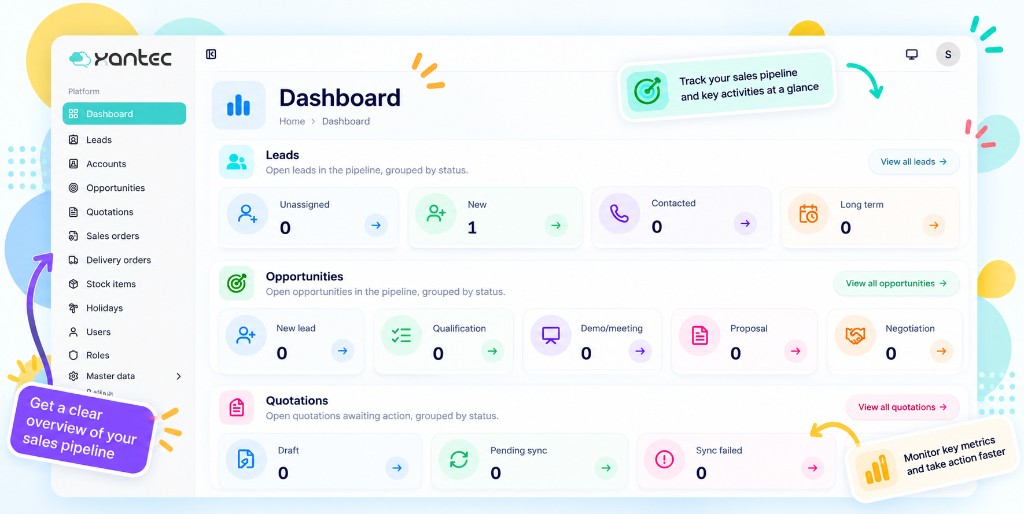
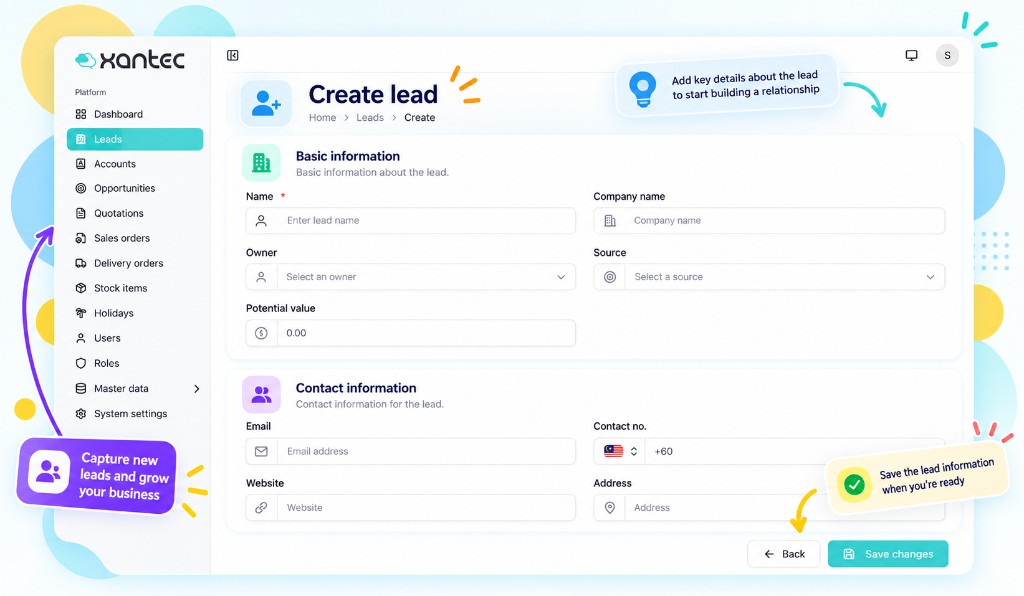
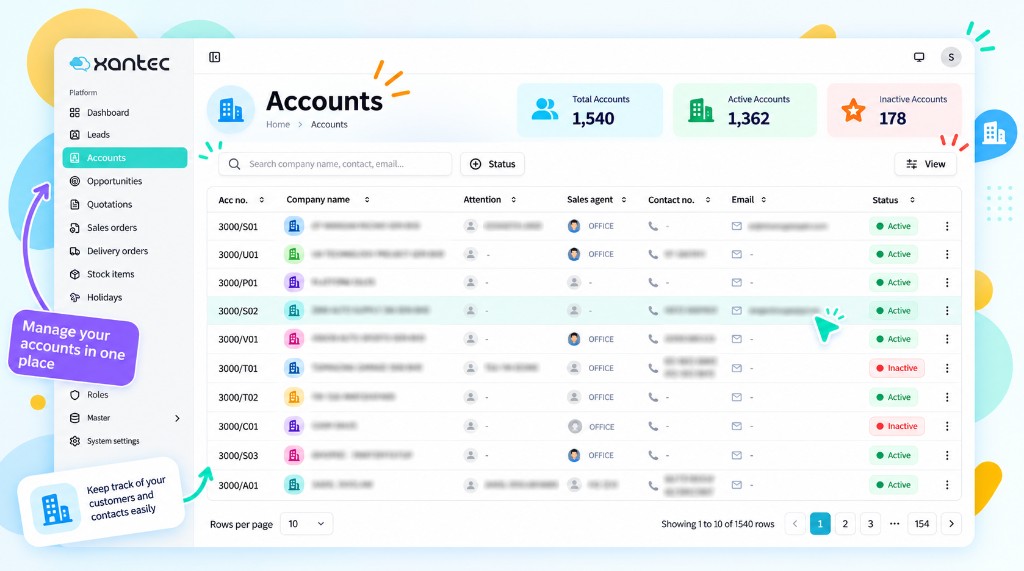
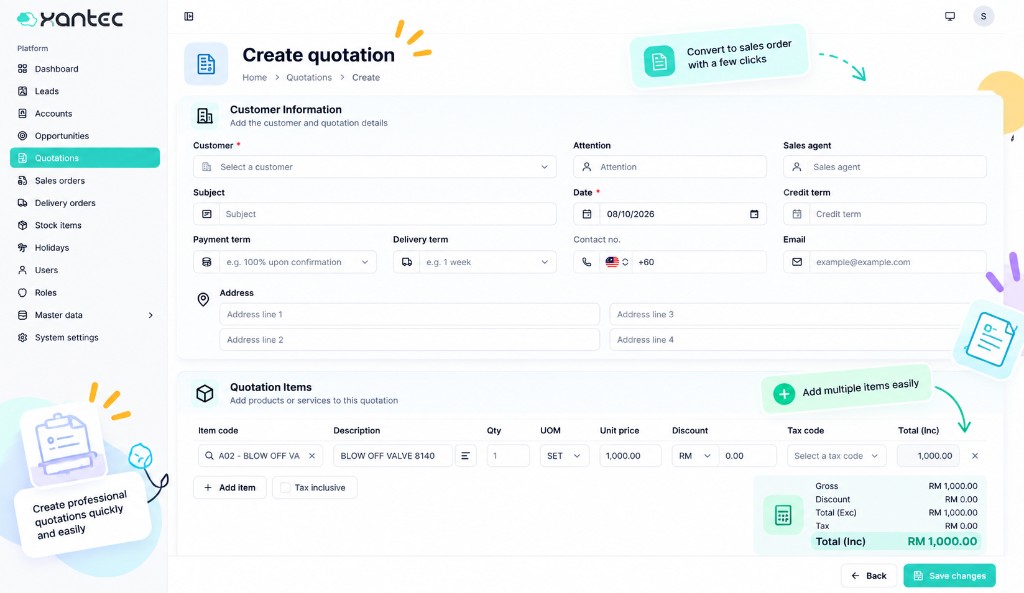
XANTEC offers both. Use the ready-made product when a standard sales process is enough, and a configured or developed CRM when the workflow is specific to the business.
For businesses that want a ready-made CRM they can deploy quickly.
TargetCRM is the subscription product. Standard sales, marketing, and customer modules are switched on without a configuration project.
For businesses with specific workflows, integrations, or requirements.
XANTEC configures or develops the CRM around how you quote, approve, and hand work to other systems.
The same customer record can cover the sales work most Malaysian teams already do in spreadsheets, inboxes, and chat.
Capture enquiries, assign an owner, and convert a lead without losing the history behind it.
Keep accounts, contacts, and buying context on one record so sales and operations refer to the same customer.
Stage opportunities and review forecast weight in the way your managers already look at revenue.
Quotations, sales orders, and related documents, with approval and pricing rules your team defines.
Tasks and next steps on open deals, including reminders for stalled follow-up based on rules you approve.
Pipeline and activity views so managers can review how the team is tracking against its sales targets.
Pipeline snapshots and summaries drawn from live CRM data, for reviews that used to wait on a slide deck.
Bring WhatsApp, email, and web-form enquiries into the CRM, with an owner on the conversation where chat is how customers buy.
Generate proposals, contracts, and similar papers from approved templates, and keep commercial documents with the customer.
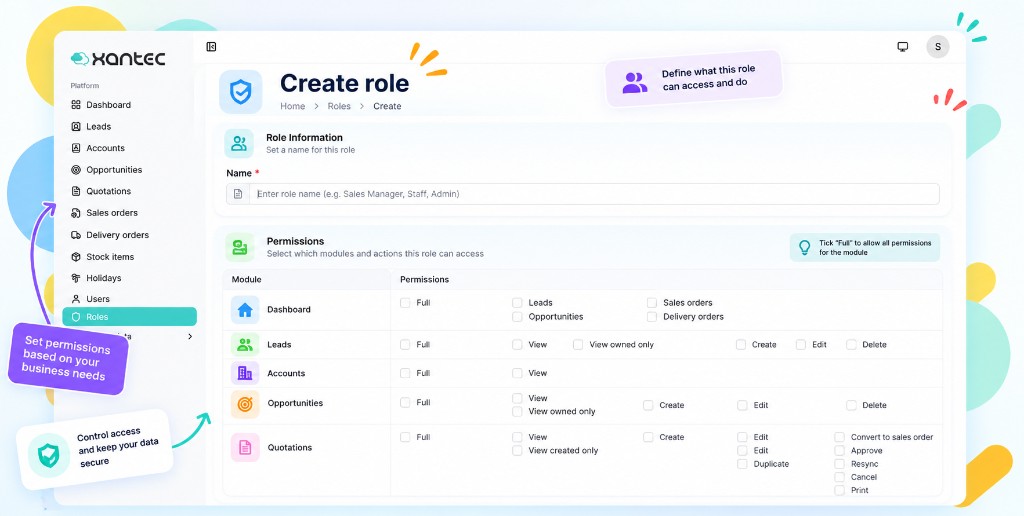
Role-based access so each person sees the records and actions their job needs.
Routing, approvals, and follow-up rules you define. Draft notes can be prepared for staff to review before anything is sent.
Documented APIs so the CRM can exchange data with finance, inventory, messaging, and other systems you already run.
Sales Pipeline
Capture, qualify, quote, close, fulfil, and keep the customer for the next order — one path instead of separate spreadsheets.
The CRM is shaped around how Malaysian companies already sell: branch teams, chat-first customers, and finance systems that have to stay in step with sales. Implementation and support are handled by XANTEC in Malaysia.
XANTEC can integrate a CRM with the business applications you already use, so sales does not re-key the same customer into finance or chat. Connections are scoped to your systems — see API integration and WhatsApp automation where those channels are part of the work.
Customer records and document hand-offs mapped to AutoCount, with the direction of data agreed in discovery.
Enquiries from WhatsApp can land in the CRM with an owner, where your WhatsApp setup and consent rules allow it.
Enquiries from shared mailboxes can be stored against the lead or customer, with the thread kept for follow-up.
Form submissions from your website can create or update CRM records instead of sitting in a separate inbox.
Online orders and customer accounts can be connected where the shop and the sales team need the same record.
Payment status can be reflected against the order or invoice when the gateway exposes a usable update.
Stock, allocation, or order status can be shown to sales when the ERP is the system that owns those figures.
Besides AutoCount, other accounting packages can be connected when customer and billing data need to move both ways. Invoice flows can be scoped toward LHDN e-invoicing where that is required; the submission path depends on your middleware and is agreed in discovery.
Where a system offers an API, the CRM can exchange records through documented requests rather than manual export.
Industry tools and internal systems can be included when they hold customer, order, or service data the CRM should see.
When the standard CRM workflow does not fit the way you sell, XANTEC can customise or develop the parts that are specific to the business. This is additional work on top of the CRM, not a separate product you have to choose instead of TargetCRM.
Typical Development Includes:
CRM work for Malaysian companies, written from the jobs each system actually does.
The agency’s CRM keeps each customer and each maid on one record. Staff can see which customer a maid is linked to without opening a second list. A placement stays on that shared record, so the team updates the customer and the maid together instead of keeping two separate lists.
The CRM is connected to AutoCount, so accounting and inventory stay tied to the customer record. Once a customer is in the CRM, accounting and stock in AutoCount use that same customer instead of a second manual entry. Sales look up the customer in the CRM while accounting and inventory remain linked through AutoCount.
Customers and the agents who look after them share one CRM. Follow-up for a customer stays on the same record the agent uses, so the company and its agents work from one list. The next follow-up is visible on that shared customer record.
A CRM for EO EXTRAORDINARY ENTERPRISE, a financial company in Johor Bahru. The Johor Bahru team keeps the company’s customer relationships in that CRM, so customer follow-up for the business sits in one system.
The sales CRM follows a job from the first lead through installation follow-up, so sales and operations in Kuala Lumpur work from the same pipeline. Lead capture and installation follow-up stay on that job. The team can see the pipeline, and handoffs between sales and operations use the same record.
The Penang sales team uses one CRM for leads, follow-ups, and deal stages. Managers review the pipeline from those same records. Reporting draws on that CRM, so managers can coach the pipeline from the leads, follow-ups, and deal stages already stored there.
XANTEC has been a software company in Malaysia since 2006, building and supporting systems for local businesses.
XANTEC is a Malaysian software company and works with clients across Malaysia.
CRM work sits alongside XANTEC’s custom software practice, when a process needs more than a standard module.
XANTEC configures CRM workflows and connects them to accounting, messaging, and other business systems.
Implementation, training, and support are handled by the Malaysian team, in local business hours.
A typical engagement follows these steps. The statement of work after discovery sets the actual scope and timing.
01
Map how leads, quotations, and follow-ups work today, and which systems must stay connected.
02
Set stages, fields, documents, and permissions to match that process.
03
Connect the systems in scope, and develop only the workflow the standard CRM does not cover.
04
Your team checks records, approvals, and integrations before go-live.
05
Move the agreed configuration and data into the live environment.
06
Train the people who will use the CRM, by role.
07
Local support after go-live, for fixes, adjustments, and ongoing use.
CRM System Malaysia is software that keeps customer and lead information, sales activity, and follow-ups in one place. The team works from that record instead of searching inboxes and spreadsheets for the same relationship.
A CRM system records contacts, tracks leads through a pipeline, stores quotations and tasks, and shows managers what the sales team is working on. It can also connect to tools you already use, such as email, WhatsApp, and accounting.
CRM System Malaysia configuration and starter scopes from XANTEC start from as low as RM 3,000. Wider rollouts and integrations are quoted after discovery, based on users, connections, and support. TargetCRM is a separate subscription product; current plans are on targetcrm.com.my.
CRM software such as TargetCRM is a ready-made product for standard sales, marketing, and customer modules. A custom CRM in Malaysia is configured or developed when the workflow, documents, or integrations need more than that product.
Yes. A custom CRM from XANTEC can include configured modules, approvals, documents, and permissions, plus extra functions when the standard workflow does not fit the business.
Yes. CRM integration with AutoCount can map customer records and accounting hand-offs. What moves, and in which direction, is scoped during discovery and depends on your master data and accounting setup.
Yes. CRM integration with WhatsApp can route enquiries into the CRM with an owner on the thread, where your WhatsApp setup and consent rules allow it.
XANTEC can include data migration when the current system exports records that can be mapped. The effort depends on data quality and is scoped in discovery.
A CRM implementation pilot can go live in weeks when master data is ready. Rollouts with heavier integrations are phased. The timeline is written into the statement of work after discovery.
Yes. After deployment, XANTEC provides training and local technical support and maintenance for the teams using the system.
Tell us how you handle leads, quotations, and follow-ups. We will outline whether TargetCRM or a configured CRM is the better fit.