
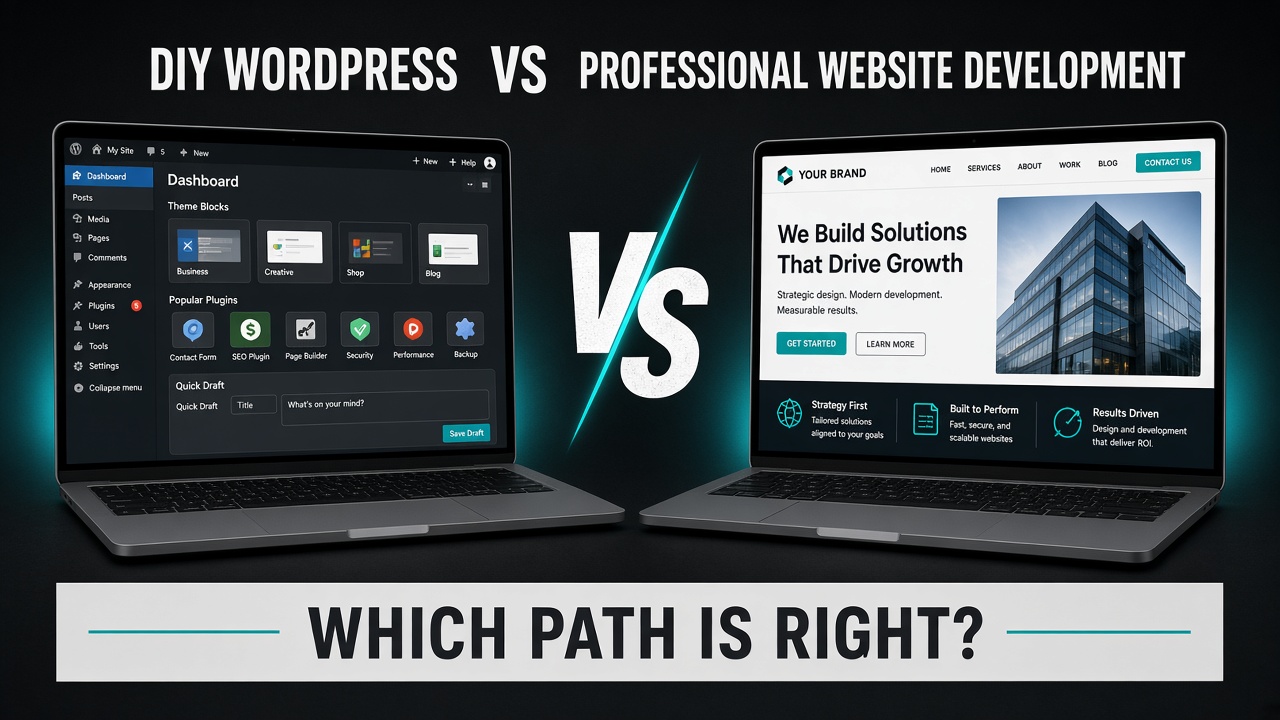
WordPress powers a large share of Malaysian business sites. The real question is not “WordPress or not?”—it is DIY WordPress vs professional website development.
This decision guide helps you choose when self-building is enough, and when a professional partner reduces risk for a business-critical site.
Related: web design Malaysia · ecommerce web design · how much web design costs
Quick Answer
| Lean DIY WordPress if… | Lean professional development if… |
|---|---|
| You (or a staffer) are comfortable with hosting, updates, and plugins | The site is mission-critical for leads or sales |
| Scope is a small brochure with low integration needs | You need security hardening, performance budgets, and QA |
| You accept learning curves and weekend firefighting | You want documented handover, staging, and revision control |
| SEO is “good enough” for low competition | You need structured IA, schema, and SEO/AEO/GEO coordination |
What DIY WordPress Looks Like in Practice
A typical DIY path:
- Buy hosting + install WordPress
- Pick a theme and page builder
- Add plugins for forms, SEO, cache, security, backups
- Publish and maintain updates yourself
It works when someone owns the stack. It fails when plugins conflict, backups are missing, or “temporary” page-builder sprawl becomes unmaintainable.
What Professional Website Development Adds
Professional builds still often use WordPress (or Astro/headless when fit)—the difference is process:
- Requirements, sitemap, and content plan before theme shopping
- Controlled plugin list (fewer moving parts)
- Staging → UAT → launch with checklists
- Performance and Core Web Vitals attention
- Security practices, roles, and backup strategy
- Clear ownership of domain, hosting accounts, and admin users
- Optional ecommerce, multilingual, and API integrations
See how we approach delivery on web design Malaysia.
Side-by-Side Decision Factors
1. Security and uptime
DIY sites are frequent targets when abandoned plugins linger. Professionals budget patch windows and monitoring—especially for ecommerce or lead-gen sites.
2. Plugin sprawl
Page builders + five SEO plugins + three form tools = fragility. A professional scope prefers fewer, known components.
3. Design and conversion
Themes look finished until real Malaysian copy, PDPA text, and proof blocks arrive. Professional UI/UX designs around real content and enquiry paths.
4. SEO structure
DIY can rank. Competitive categories need intentional heading hierarchy, internal links, entity pages, and technical hygiene—often paired with an SEO programme.
5. Handover and continuity
Ask: if your DIY admin leaves, can the next person recover the site? Documentation and credential ownership matter as much as the theme.
When DIY Is Still Smart
- Internal microsites with no public ads spend
- Early experiments before product-market fit
- Teams that already run WordPress well and only need design polish later
When to Hire Professionals Immediately
- You are buying ads and cannot afford broken forms
- You need ecommerce, multi-language, or ERP/CRM hooks
- Compliance, brand, or multi-stakeholder approvals are in play
- You want a partner accountable after launch
Next Step
List your must-have pages, plugins you already use, and who will maintain the site. Book a consultation or start from web design Malaysia—we will tell you honestly if DIY is enough or if a managed build will cost less over 24 months.