
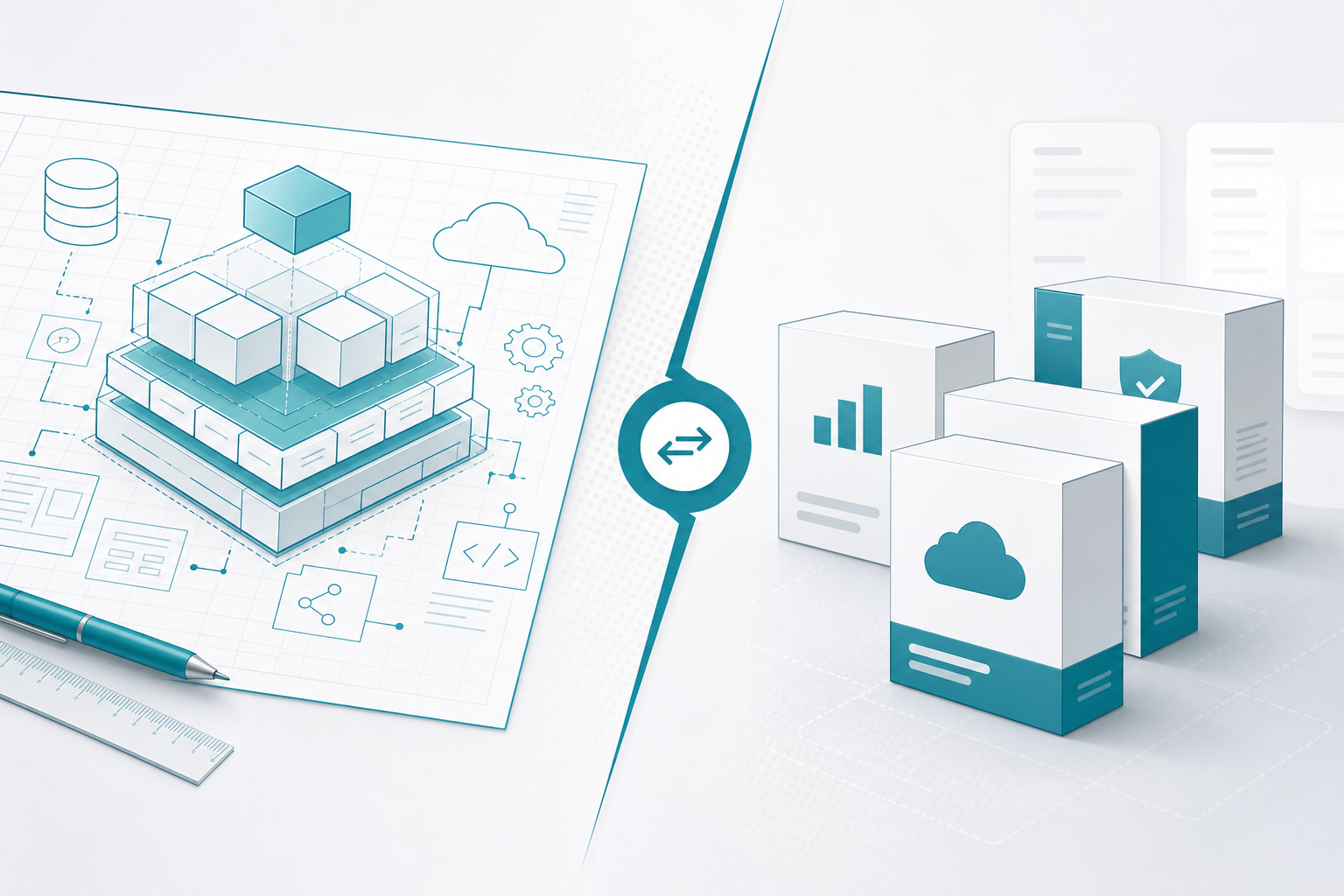
Enterprise leaders evaluating a software development company Malaysia teams trust face the same question: buy another SaaS seat, or build around how your towers actually close month-end? There is no universal winner—only fit against workflow, compliance, and integration depth. If you are outsourcing delivery, read our safe outsourcing checklist before you sign.
When off-the-shelf wins
Shelf products work when:
- The process is industry-standard (payroll, basic CRM, standard accounting).
- Time-to-value matters more than differentiation.
- Vendor roadmaps cover your compliance needs (e.g. MyInvois connectors maturing).
- Integration APIs are documented and stable.
When custom software wins
Engage a software development company Malaysia partner when:
- Your margin depends on workflows competitors cannot copy (allocation engines, traceability, partner tiers).
- You must bridge legacy ERP, WhatsApp operations, and modern portals without nightly CSV rituals.
- PDPA, segregation of duties, or audit trails exceed what generic SaaS roles provide.
- Regional subsidiaries need different rules under one data contract.
Build-vs-buy decision matrix
| Signal | Lean off-the-shelf | Lean custom |
|---|---|---|
| Competitive advantage from process | Low | High |
| Integration count (ERP, WMS, CRM) | Few | Many |
| Regulatory narrative | Standard | Custom approvals / logs |
| Change frequency | Low | High (seasonal, promo, OEM) |
| Internal IT capacity | Wants vendor SLA | Wants owned codebase |
Hidden costs of “cheap SaaS stacks”
Each department buying its own tool creates SaaS islands—especially in Kuala Lumpur HQs. Finance reconciles three exports; sales lives in WhatsApp; service tickets never hit CRM. Custom work often costs less than five years of overlapping subscriptions plus integration duct tape.
How Xantec approaches enterprise custom work
We are a software development company Malaysia enterprises engage for portals, billing engines, API middleware, and line-of-business apps—not slide decks. Discovery maps data contracts first; engineering sprints follow with documented APIs and observability.
When we built inventory middleware for a Shah Alam distribution group, the blocker was not UI—it was rate limits between marketplace APIs and AutoCount posting rules. Off-the-shelf iPaaS could not express their SST and voucher logic; a focused custom service with retries and finance-owned exception queues fixed month-end in two release cycles.
Phased delivery reduces risk
You do not need a big-bang ERP replacement. Common pattern:
- Stabilise integrations (read-only sync, reconciliation dashboards via API integration).
- Replace the highest-pain manual step (e.g. WhatsApp-to-CRM capture).
- Expand modules once data contracts prove stable—including e-invoicing or customer portals tied to your public web design site.
Governance questions for your steering committee
- Who owns the data model and API versioning?
- How are PDPA retention and access logs enforced?
- What is the exit plan if we change vendors—do we own source code?
- How does MyInvois validation align with GL posting?
Next steps
If shelf tools fit, we will say so. If custom is justified, we scope MYR phases with milestones. Explore our custom software practice or contact us with your integration map and audit requirements.
For a concise reference comparison of fit, cost model, and control, see Custom Software vs Off-the-Shelf Software in the Knowledge Center.